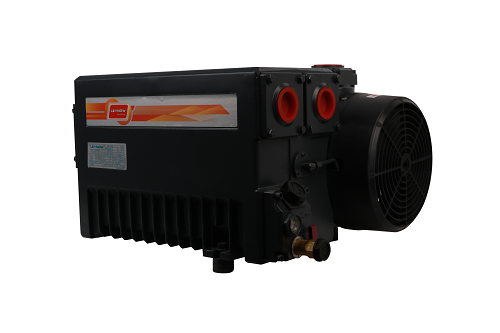
Vacuum Systems: working principle, Core Applications and Industry Development
In modern industrial manufacturing, high-end research and precision production, a vacuum environment has become a key basic condition for process stability, product quality and efficient production. As the core equipment for obtaining vacuum at scale and in a systematic way, vacuum systems combine multiple Vacuum Pump types with intelligent control and integrated design to build vacuum environments of different grades stably, efficiently and continuously, covering the full range from low and medium vacuum to high and ultra-high vacuum. As intelligent manufacturing, new energy, semiconductors and biomedicine upgrade rapidly, vacuum systems iterate and spread ever faster, becoming important basic equipment supporting high-end manufacturing and technological innovation. As a specialised and innovative enterprise in China's vacuum equipment sector, Leno Vacuum Pump has spent years on vacuum system research and manufacturing and can provide customised complete vacuum system solutions for various industries, helping enterprises solve vacuum challenges in all kinds of duty conditions.
1. What is a vacuum system
A vacuum system is not a single device but a complete vacuum-generating set integrating a Backing Pump, main pump, vacuum valves, vacuum gauges, buffer tanks, control system, piping and filtration components. Through modular combination it runs different pump types in series or parallel, overcoming the limits of a single pump in pumping speed, Vacuum Level, starting pressure and duty tolerance, and achieving fast, stable and continuous evacuation from atmospheric pressure to the target vacuum level, meeting the scale, continuity and reliability requirements of industrial production and research.
Compared with standalone vacuum pumps, vacuum systems offer higher pumping speed, higher vacuum, more stable operation, stronger adaptability and a higher degree of intelligence. Pumping speed, vacuum grade, corrosion and explosion protection, oil-free cleanliness, automatic start-stop and automatic drainage can be customised to the process, making them the mainstream solution for industrial vacuum applications. Leno vacuum systems use a modular integrated design with optional rotary vane, Roots or dry pumps, buffer tanks and an intelligent PLC control system; the complete unit is commissioned before delivery, greatly shortening on-site Installation time and adapting to CNC machining, metallurgy, electronics and many other production sites, delivering a one-stop vacuum system.
2. Core working principle of vacuum systems
Fundamentally, a vacuum system works by having multiple pump stages work together to continuously remove gas molecules from a closed vessel and reduce internal pressure to create vacuum, relying on gas pressure differences and mechanical or molecular transfer mechanisms within the pumps.
Typical configurations use a backing pump plus a booster or main pump in two-stage or multi-stage series: the backing pump (such as a rotary vane, liquid ring or screw pump) evacuates the system from atmospheric pressure to a preparatory vacuum, creating conditions for the main pump; the main pump (such as a Roots, turbomolecular or diffusion pump) then removes further gas to raise the vacuum level quickly. Roots pumps use two synchronised counter-rotating rotors to create volume changes and deliver high pumping speed boosting; turbomolecular pumps exchange momentum with gas molecules through a high-speed rotor to convey molecules directionally and achieve high or ultra-high vacuum; dry screw pumps run oil-free, compressing and discharging gas through rotor meshing, suited to clean processes.
The whole system is controlled by a PLC for automatic start-stop, closed-loop vacuum regulation, overload protection, fault alarms and remote monitoring, with buffer tanks and automatic drainage ensuring stable vacuum pressure and continuous supply without pressure fluctuation affecting production. Leno vacuum systems use a self-developed intelligent control system for closed-loop vacuum pressure control and buffer tank stabilisation, effectively solving air fluctuation problems on industrial sites. Pump matching logic is optimised for coordinated multi-stage operation, balancing pumping efficiency and energy consumption, and supporting 24-hour continuous duty for long factory production runs.
3. Main application scenarios of vacuum systems
Vacuum systems have penetrated deeply into all sectors of the national economy and become a basic tool of high-end manufacturing and research innovation. Core applications include the following.
Electronics and semiconductors: chip manufacturing, wafer coating, lithography, etching and packaging must be carried out under high vacuum to prevent oxidation, dust contamination and impurity interference. Vacuum systems provide stable, clean vacuum for semiconductor lines, safeguarding device precision and yield.
New energy: photovoltaic cell coating, vacuum drying of lithium battery electrodes, hydrogen storage and transport, and anode material sintering rely on vacuum for dehumidification, degassing and oxidation prevention, raising battery energy density and cycle life; these are key supporting equipment for new energy capacity expansion.
Vacuum metallurgy and special materials: vacuum melting, degassing, sintering and heat treatment isolate air, reduce oxide inclusions and optimise microstructure, improving the strength and corrosion resistance of superalloys, titanium alloys and special steels, and supporting aerospace and nuclear equipment materials manufacturing.
Pharmaceutical and food industries: freeze drying of drugs, vacuum concentration, aseptic packaging and food preservation and dehydration use vacuum systems for low-temperature, high-efficiency processing that retains nutrients and extends shelf life, meeting GMP and HACCP clean production requirements.
Machining and industrial support: vacuum chucks on CNC machining centres, degassing in injection moulding, vacuum-assisted moulding, sheet thermoforming and printing lamination use vacuum for fast clamping and deaeration, improving machining accuracy and production efficiency.
Research and aerospace: laboratory simulation, quantum computing, superconducting testing, space environment simulation and spacecraft leak detection rely on high and ultra-high vacuum systems to build extreme conditions close to space, supporting frontier scientific research.
Leno Vacuum Pump has extensive experience delivering industry projects and can provide dedicated complete vacuum system solutions for CNC machining, new energy, pharmaceuticals, metallurgy and other duties. Whether it is a CNC negative-pressure clamping system with buffer tank or an oil-free clean vacuum station for pharmaceuticals, Leno customises to requirement, and many factories and research institutes already rely on Leno vacuum equipment for their production processes.
4. Common operating problems and optimisation
During long-term industrial operation, vacuum systems are prone to insufficient vacuum, pump faults, oil contamination and high energy consumption; systematic Troubleshooting and standardised Maintenance can significantly improve stability.
Insufficient vacuum: check pump operating condition, seal ageing, pipe leakage, filter blockage, oil degradation and whether pump capacity matches demand, and replace consumables, repair leaks and adjust pump combinations in time.
Pump faults and abnormal noise: usually caused by bearing wear, rotor seizure, poor lubrication or overload. Carry out regular maintenance, recalibrate clearances and replace faulty parts; intelligent systems can give early warning through vibration and temperature monitoring.
Oil contamination and process incompatibility: conventional oil pumps easily generate oil vapour that contaminates precision processes. Switch to dry oil-free vacuum systems or add high-efficiency oil-gas separators to eliminate contamination at the source, suitable for the high cleanliness requirements of electronics, pharmaceuticals and food.
High energy and maintenance costs: conventional fixed-speed systems consume more power. Upgrading to permanent magnet VSD, intelligent coordinated control and central vacuum systems can save more than 30 percent of electricity, while centralised supply reduces redundant equipment and maintenance workload.
Addressing these common pain points at the product design level, Leno vacuum systems use high-quality sealing components to reduce leakage probability, offer optional Oil-Free Pump bodies and high-efficiency oil-gas separators to avoid oil contamination, and use variable-frequency intelligent control to adjust output on demand and cut energy use. The complete unit carries a 12-month warranty, with service outlets in many regions providing technical guidance to help customers troubleshoot equipment faults quickly and reduce maintenance pressure.
5. Industry trends and outlook
The vacuum system industry is accelerating towards intelligence, oil-free operation, integration and low carbon: dry oil-free technology is spreading quickly, and magnetic levitation and VSD energy-saving solutions are widely adopted; IoT and digital twins enable remote monitoring and predictive maintenance, greatly reducing downtime risk; customised integrated solutions with buffer tanks, automatic start-stop, automatic drainage and explosion-proof corrosion-resistant features are becoming mainstream, better matching specific process needs.
Driven by domestic substitution and dual-carbon policies, domestic vacuum systems continue to break through in reliability, vacuum grade and intelligence, gradually ending the monopoly of foreign brands with better cost and faster service, strongly supporting manufacturing upgrades. Leno Vacuum Pump insists on technological innovation, continuously iterating oil-free, energy-saving and intelligent vacuum systems benchmarked against international product performance, and persisting in domestic R&D and manufacturing to offer Chinese manufacturers cost-effective vacuum system choices.
As the vacuum cornerstone of modern industry, vacuum systems support high-quality development in electronics, new energy, metallurgy, pharmaceuticals, machining and research aerospace through systematic design, efficient and stable pumping and strong scenario adaptability. Understanding their working principle, mastering application points and optimising operation and maintenance allows full equipment performance, improving production efficiency and product quality. As technology continues to innovate, vacuum systems will become more efficient, cleaner, smarter and lower-carbon. Leno Vacuum Pump will keep deepening its work in vacuum equipment, empowering intelligent manufacturing upgrades across industries with customised complete vacuum systems.