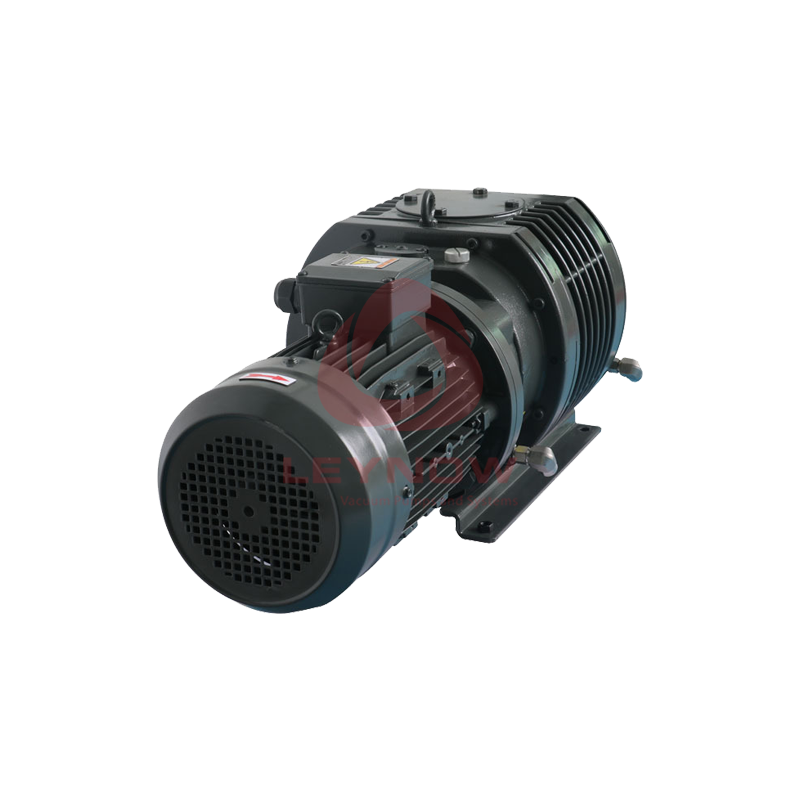
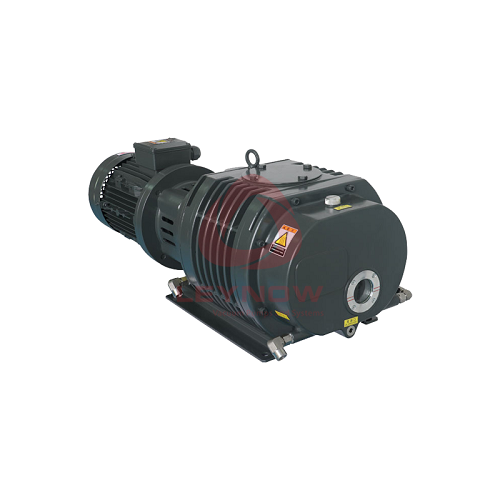
AI Training and high-performance supercomputing have entered the era of ultra-high density. Immersion liquid Cooling, with its extremely low PUE and powerful heat dissipation, has become the industry's ultimate route, and the Vacuum Pump is the core heart of safe, stable negative-pressure liquid cooling operation. Generic vacuum selection for industry and computing centres has crystallised into five hard principles. Drawing on its experience in developing and manufacturing a full range of Dry Vacuum Pumps, Dongguan Leno has turned the five principles of Vacuum Level, pumping speed, dry construction, redundancy and tiered selection into standardised hardware solutions that fully cover 30 kW, 80 kW and 200 kW cabinet classes, giving selection a firm basis and enabling two-way synergy between liquid cooling and vacuum equipment. Liquid cooling negative-pressure systems require a vacuum level no lower than -0.085 MPa, using negative pressure to prevent pipe leakage and ensure smooth coolant circulation. All Leno vacuum pumps reliably clear this threshold, from conventional rotary vane pumps to high-power screw and Roots systems, precisely locking the negative pressure range and adapting to fluorinated fluid and mineral oil immersion duties; if a pipe is damaged, air flows inward, completely avoiding coolant leakage that could short-circuit servers and meeting the round-the-clock safety baseline of computing rooms.
Accurate pumping speed matching is the second principle. The industry calculates pumping speed from cabinet count, total pipe volume and pipe leakage, and mandates a 30 percent redundancy margin for duty fluctuations. Leno can perform customised pumping speed calculations based on room cabinet scale: small computing clusters use small dry pumps, while 200 kW ultra-high density immersion rooms use high-flow screw and Roots systems, with ample margin so that negative pressure does not drop when multiple cabinets run in parallel, avoiding insufficient extraction, poor circulation and falling heat exchange efficiency. Leno operates a complete flow test laboratory and tests every pump model across multiple duty points before delivery, ensuring theoretical calculations match actual on-site parameters and solving the common pain points of undersized selection and later rework.
Prioritising oil-free dry construction is the key rule for coolant cleanliness, since lubricant vaporisation and leakage contaminate piping, clog cold plates and accelerate medium ageing. Leno insists on dry, Oil-free Vacuum Pumps as the liquid cooling standard, promoting dry construction across its rotary vane, screw and Roots ranges to completely isolate oil vapour from the coolant loop and greatly extend the life of piping, cold plates and immersion tanks. For continuous 7x24 operation, Leno dry pumps have internal anti-corrosion optimisation, adapting to various insulating coolants and preventing media from corroding the pump body, balancing cleanliness and durability and perfectly meeting the hard requirement that computing liquid cooling must be free of oil contamination.
A 1-duty plus 1-standby redundant configuration for the core vacuum pump is indispensable for continuous computing room operation. AI training and supercomputing cannot stop, and a vacuum pump failure can easily cause cabinet overheating and frequency reduction. Leno recommends a duty-plus-standby configuration for all liquid cooling vacuum pumps, with intelligent pressure-linked control that instantly switches to the standby pump if the duty pump fails. For ultra-reliable scenarios such as 200 kW immersion, Leno adds an independent degassing pump to form a multi-pump redundant architecture, so that even with one unit under Maintenance the whole negative pressure system keeps running, supporting uninterrupted computing all year and avoiding computing losses from single points of failure.
Budget-tiered model matching has become an industry consensus: 30 kW conventional cabinets use rotary vane pumps, 80 kW medium-high density cabinets use Roots plus rotary vane systems, and 200 kW ultra-high density immersion cabinets use screw plus Roots combinations. Leno covers all three tiers with domestically developed products that keep procurement costs under control: 30 kW rotary vane pumps, 80 kW compound systems and 200 kW high-power Vacuum Systems form a standardised product matrix, so customers can select pumps precisely by cabinet power without wasteful over-specification or performance shortfalls from under-specification, balancing computing demand, hardware performance and construction budget.
The liquid cooling industry and the vacuum pump industry are deeply bound and mutually empowering. In liquid cooling equipment production, cold plates and piping require factory evacuation and nitrogen holding pressure tests for sealing checks, performed with rotary vane and dry pumps; Leno supplies large volumes to liquid cooling equipment makers for component leak testing, safeguarding upstream production quality. In room operation, negative pressure circulation, medium degassing, fluid replenishment and periodic pipe leak testing all rely on vacuum pumps, and Leno pump systems cover the full lifecycle maintenance needs of immersion liquid cooling. Meanwhile, high-power Roots and Screw Vacuum Pumps generate significant heat under sustained high load, so Leno fits liquid cooling jackets to its main models, using the cooling loop to dissipate heat from the vacuum pump itself and stabilise pump body temperature, while the liquid cooling relies on the vacuum pump to establish safe negative pressure. The two reinforce each other: the vacuum pump is the power heart of liquid cooling, and liquid cooling in turn safeguards long-term stable vacuum pump operation, forming a complete closed-loop industry chain.
As domestic AI large-model training and supercomputing centres are deployed at scale, large-scale adoption of immersion liquid cooling is now a certainty. Following the industry's five selection principles, Dongguan Leno uses a full range of dry vacuum hardware to meet cabinet adaptation needs across power classes, and with its local Dongguan R&D and production advantages balances parameter compliance, operational safety, long-term maintenance and domestic cost, maximising the two-way value of liquid cooling and vacuum pumps and providing standardised, replicable vacuum support solutions for China's high-density green computing infrastructure.