

A Complete Guide to Maintaining the Built-in Vacuum Pump of a Vacuum Drying Oven
In the vast fields of modern industrial production and scientific research, the vacuum drying oven plays an irreplaceable role as a quietly working hero behind the scenes. From precise drying of pharmaceutical raw materials to ensure drug quality and stability, to drying protection of precision electronic components to prevent moisture damage; from drying and purifying special materials in chemical R&D to support new material development, to drying and preserving food to extend shelf life, the vacuum drying oven is everywhere. Among its many components, the vacuum pump is undoubtedly one of the most core parts, and its performance and condition largely determine the overall effectiveness of the oven. At the same time, scientific and reasonable Maintenance of the vacuum pump is key to its service life and operational stability. So whether you run an industrial enterprise or a research laboratory, when choosing a fully automatic vacuum drying oven you should not only understand the type of vacuum pump used but also attach great importance to daily maintenance. Let us now explore the knowledge around built-in vacuum pumps in vacuum drying ovens.
1. Types of vacuum pump
1) Dry Vacuum Pumps
Dry vacuum pumps are often affectionately called Oil-free Vacuum Pumps. Their distinguishing feature is the ability to achieve the required Vacuum Level through the machine's own precision components. This gives them many advantages in use, most notably pollution-free green operation and the elimination of cumbersome maintenance. In daily laboratory work, oil-free piston and corrosion-resistant diaphragm dry vacuum pumps are popular. Oil-free piston pumps draw in and discharge gas through reciprocating piston motion; the structure is relatively simple and operation stable, meeting the vacuum requirements of general experiments. Corrosion-resistant diaphragm pumps transfer gas through reciprocating diaphragm deformation and are particularly suited to experiments involving corrosive gases, providing strong support for researchers in these fields.
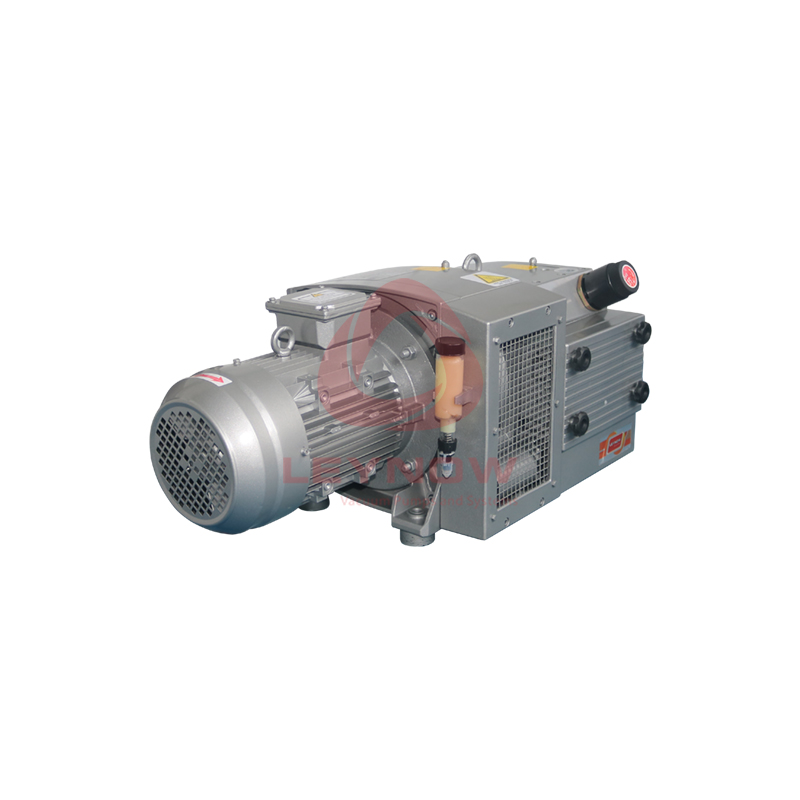
Among dry vacuum pump brands, Leno stands out. Leno dry vacuum pumps use advanced materials and manufacturing processes that further optimise performance. Internal components are carefully designed and finished, greatly improving vacuum stability while ensuring efficient operation. When handling experiments with extremely high vacuum requirements, Leno dry vacuum pumps reach the required vacuum precisely and hold it stable over long periods, providing a solid guarantee for accurate results. Leno pumps also perform excellently in reducing noise and vibration, producing no excessive disturbance even during long continuous operation, creating a quiet and stable working environment for the laboratory.
2) Non-dry vacuum pumps
The non-dry family mainly includes oil-sealed vacuum pumps and Water Ring Vacuum Pumps. Although their working principles and structures differ, they share the need for another substance, such as oil or water, to reach the desired vacuum level. In practical applications, the oil-sealed rotary vane pump is the star product among non-dry pumps, widely used across industries. It draws in and discharges gas through high-speed rotation of vanes in the pump chamber, using centrifugal force to generate vacuum. It performs well in achieving vacuum and handling gas volumes, meeting the strict high-vacuum requirements of many industrial and research processes. Water ring vacuum pumps use water as the working medium, generating negative pressure through circulating water flow to draw gas. They offer simple structure, low cost and no pollution, and are widely used where vacuum requirements are moderate and equipment cost is a sensitive factor.

The interior of a rotary vane vacuum pump is like a precision mechanical micro-universe. Its rotor is mounted eccentrically inside the pump casing at a specific offset and kept extremely close to the fixed inner surface. When the motor drives the rotor at high speed, the vanes press against the inner wall under centrifugal force and slide along it, forming several working chambers of variable volume in the pump cavity. As the rotor keeps turning, these chamber volumes change continuously, completing the intake, compression and discharge of gas. In this process, the high-speed vane motion and close contact with the casing impose extremely high demands on manufacturing precision and material performance. Only high-precision manufacturing and quality materials can ensure stable performance and reliable vacuum over long operation.
4) Slide valve vacuum pumps
Slide valve vacuum pumps are ingeniously designed with a slide valve carefully mounted outside the eccentric rotor. When the rotor begins to rotate it drives the slide valve to slide and roll along the inner wall of the casing. In this dynamic process the valve motion changes the pump chamber volume, achieving gas intake and compression. This unique structural design gives slide valve pumps strong advantages in handling large gas flows and higher vacuum requirements. Compared with other pump types, they can reach the required vacuum in a shorter time and maintain stable output during long continuous operation, providing solid support for efficient industrial production and research.
5) Fixed vane vacuum pumps
Fixed vane vacuum pumps are equally ingenious inside. An eccentric rotor is mounted in the casing very close to the inner surface, and a radial vane is fitted on the casing, always in close contact with the rotor surface like a loyal guard. When the rotor rotates, the vane moves with it, dividing the pump chamber into two working areas of variable volume. As the rotor continues turning, these two areas continuously perform gas intake, compression and discharge, producing vacuum. Fixed vane pumps perform excellently in applications requiring high vacuum stability and long continuous operation, maintaining stable vacuum output even in complex working environments and providing reliable support for the related equipment.
2. Maintaining the vacuum pump of a fully automatic vacuum drying oven
1) Shutdown procedure
Correct sequence is essential when stopping the vacuum pump. First, close the gate valve slowly and smoothly, like building a dam across a rushing river to stop gas flow. Then watch the pressure gauge closely and stop the motor only after the reading has stabilised at zero. An incorrect sequence, such as stopping the motor first, can cause an instant pressure imbalance in the pump chamber, gas backflow and damage to internal structures. Correct shutdown effectively protects all pump components and extends service life.
2) Importance of periodic overhaul
Generally, a thorough overhaul is required after every 2,000 cumulative operating hours, much like a regular health check for a person, identifying and solving potential problems in time. During overhaul, focus on the ageing of rubber seals. As the key components preventing gas leakage, rubber seals gradually age, harden and crack with use. Once they fail, vacuum is seriously affected and the pump may stop working. Also carefully check the exhaust valve plates for cracking and clean deposits on the plates and exhaust valve seat. Such deposits obstruct smooth exhaust and reduce efficiency. Periodic overhaul allows timely replacement of aged seals, repair or replacement of damaged exhaust valve plates and cleaning of deposits, keeping the pump in good condition.
3) Piping and flexibility checks
In daily use, regularly check whether the vacuum pump piping and joints are loose. Loose piping can cause gas leakage and affect vacuum and efficiency. Check connection points visually for gaps or displacement, or gently shake the piping by hand to test tightness. Another simple and effective check is to turn the pump by hand and feel whether rotation is smooth. If binding or high resistance is felt, internal parts may be worn, deformed or blocked by foreign objects, requiring prompt investigation. Keeping piping tight and the pump rotating freely is fundamental to normal operation.
4) Sensible control of operating parameters
Keep flow and head within the range stated on the nameplate; this is key to efficient operation. Every pump has an optimal design range, and when actual parameters deviate, efficiency drops sharply while energy consumption and wear increase. For example, excessive flow requires more energy to move gas, which not only overloads the motor but also puts excessive pressure on internal parts and accelerates wear. Insufficient flow can cause cavitation and also damage the equipment. Sensible control of flow and head lets the pump run efficiently and economically, reducing operating costs and extending service life.
5) Monitoring bearing temperature
Bearing temperature is an important indicator during operation. Generally it should not exceed ambient temperature by more than 35 degrees C, with a maximum of 80 degrees C. Bearings support the rotating rotor and generate substantial heat at high speed. Excessive bearing temperature thins and expels lubricating grease, worsening wear and even causing bearing burnout. To monitor temperature in real time, fit a temperature sensor to the pump and feed data to the control system for display and alarm. If the bearing temperature rises abnormally, stop the pump immediately, investigate causes such as insufficient lubrication, damaged bearings or motor overload, and take timely corrective action.
6) Checking and replacing shaft sleeves
As a key part protecting the pump shaft, the shaft sleeve rubs against other components during operation and inevitably wears. Regularly check sleeve wear, generally by measuring thickness or observing wear marks on the surface, and replace the sleeve when wear is significant. Delaying replacement not only accelerates shaft wear but also increases clearances between the shaft and other parts, affecting performance and stability. Choose reliable sleeves and install them strictly according to procedures so that they deliver their protective function and keep the pump running normally.
As the core component affecting the performance and life of a vacuum drying oven, the built-in vacuum pump comes in many types with different characteristics. Whether it is the green, pollution-free nature of dry pumps, the high vacuum achieved by non-dry pumps with the help of other media, or the unique structural designs of rotary vane, slide valve and fixed vane pumps, each plays an important role in different applications. Leno vacuum pumps have built an excellent reputation in the dry vacuum pump field with outstanding performance. Meanwhile, scientific maintenance, from shutdown procedure and periodic overhaul to piping checks, parameter control, bearing temperature monitoring and shaft sleeve replacement, requires sufficient attention from users. Only then can the pump always run in optimal condition, providing solid support for efficient and stable operation of the vacuum drying oven and helping industries move forward in production and research.


